


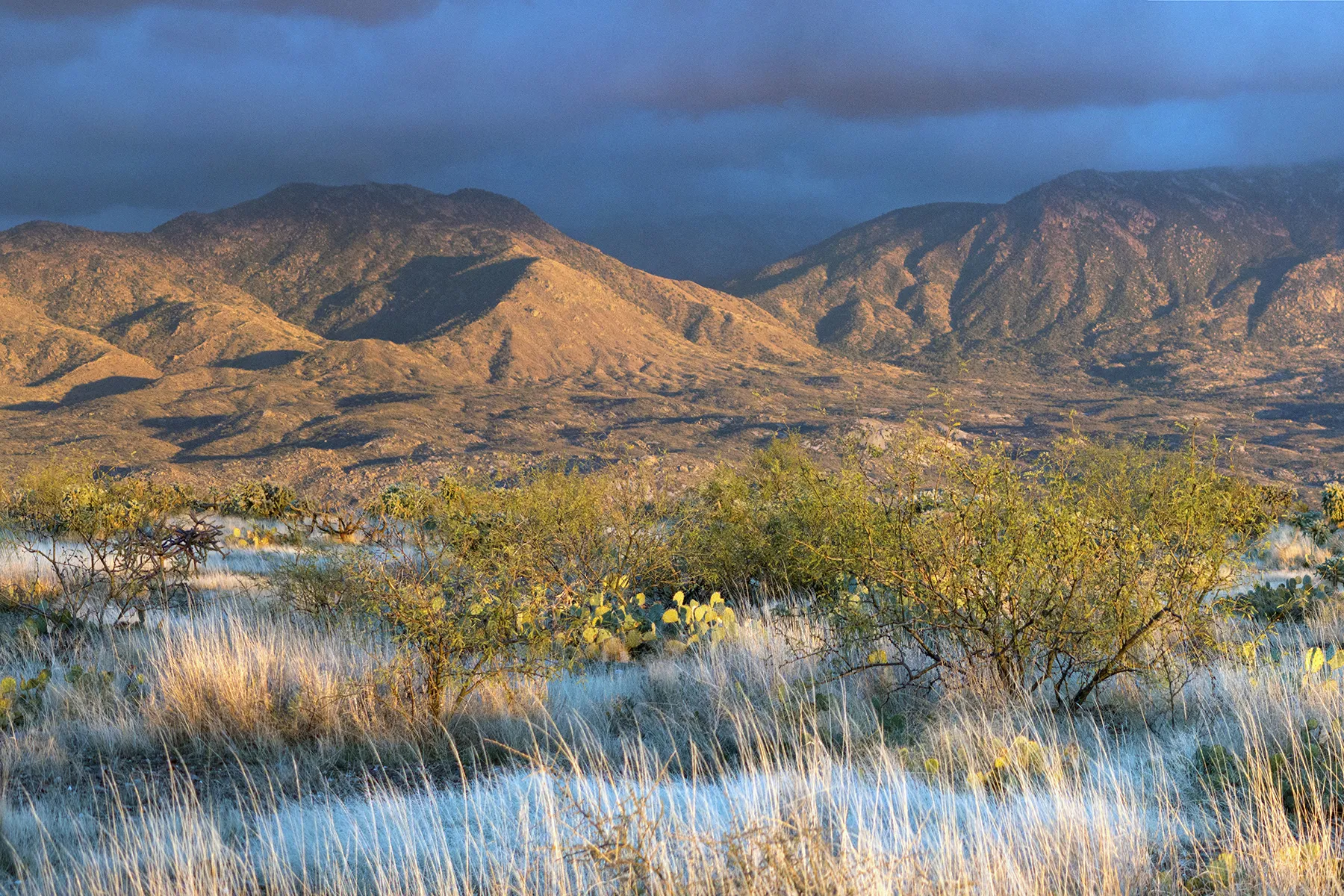
There is something about seeing a landscape from horseback that changes the way you experience it.
You notice more. The grasses moving beneath a breeze. The temperature shifting as a trail drops toward the creek. The first green appearing after rain. The silhouette of a mountain ridge against an evening sky.
At Circle Z Ranch in Southern Arizona, the land is not simply the backdrop for a vacation. It is part of the experience itself.
Set among the mountains and valleys of Southern Arizona’s Sky Island region, Circle Z encompasses 5,000 acres of preserved private riding trails, with access to landscapes that range from rolling grasslands and rocky canyons to mountain terrain and the banks of Sonoita Creek.
And this is not a landscape that stays the same.
Throughout the year, changing temperatures, rainfall, plant growth and wildlife activity continually transform the ranch. A familiar trail can look different from one month to the next. Colors change. Water moves. Grasses grow and fade. The quality of the light shifts.
For horseback riding enthusiasts, those changes mean there is always another side of Circle Z to discover.
Understanding these rhythms is also an important part of being a steward of the land. Rather than expecting nature to remain unchanged, stewardship begins with observing the landscape, respecting its cycles and recognizing that every season has a role to play.
Here is what the seasons can look and feel like at Circle Z—and why experiencing the land from horseback is one of the most memorable parts of a Western dude ranch vacation.
Winter: Crisp Air, Golden Grasslands and Wide-Open Views
Winter in Southern Arizona may surprise travelers who picture the entire state as hot desert.
At Circle Z, winter brings cooler temperatures, golden grasses, crisp mornings and wonderfully clear skies. It is a season that invites you outside.
Arizona’s precipitation follows a distinctive pattern, with both winter storms and summer monsoon rains helping shape conditions across the landscape. The University of Arizona Cooperative Extension describes the Southwest as having distinct wet and dry seasons, with winter storms beginning gradually in late fall and potentially continuing into spring.
For guests at the ranch, winter mornings often begin with an extra layer before heading to the barn. As the sun rises higher, the day warms and the surrounding landscape takes on the rich golds, browns and muted greens characteristic of the season.
From horseback, the views can seem almost endless.
Without the dense growth of warmer months, the contours of the land become especially visible. Canyons reveal their shape. Mountains appear sharply against blue skies. Trails wind through tawny grasslands toward distant ridges.
It is a beautiful time to appreciate the sheer scale of the Circle Z landscape.
Horseback Riding Through a Quieter Landscape
Winter trail riding has a distinctive rhythm.
Hoofbeats sound against the trail. Cool air makes the warmth of the sun particularly welcome. Along Sonoita Creek, the landscape takes on another character entirely as riders move between open country and the riparian corridor.
This variety is one reason horseback riding is at the heart of the Circle Z experience. Rather than seeing Southern Arizona through a windshield or from a scenic overlook, guests travel through it slowly enough to notice the details.
Circle Z’s wranglers match guests with horses according to their experience and riding style, making it possible for both longtime equestrians and newer riders to experience the ranch comfortably.
And because Circle Z is a small, intimate dude ranch, riding doesn’t need to feel like a one-size-fits-all tourist activity. It is an opportunity to experience real ranch country from the saddle.
Ready to trade winter weather for Arizona sunshine and miles of trails? Book your Circle Z Ranch vacation and experience the land from horseback.
Spring: The Land Begins to Stir
Spring arrives gradually.
The mornings soften. Days lengthen. New growth begins appearing across the land, and subtle colors start returning to the landscape.
You may notice the change first in the grasses or along Sonoita Creek. Plants respond to warmer temperatures and available moisture, while birds become increasingly active.
In a landscape as ecologically diverse as Southern Arizona, these changes are particularly fascinating.
Circle Z sits within the greater Sky Island region, a landscape the U.S. Geological Survey describes as exceptionally biologically diverse. Southeastern Arizona lies at the meeting point of several major ecological regions, helping create an extraordinary range of habitats, plants and wildlife.
For riders, that diversity means a single trail can move through dramatically different environments.
One moment, you may be riding across an open grassland. Later, the trail can descend into a shaded canyon or follow the creek before climbing again toward open country.
In spring, those transitions become even more noticeable.
A Season Made for Paying Attention
Horseback riding naturally encourages observation.
A horse travels at a pace that allows you to look around rather than simply pass through. You begin noticing changes in vegetation, tracks along the trail, birds overhead and the way water has shaped a canyon.
For people accustomed to busy schedules, this can be one of the unexpected pleasures of a dude ranch vacation.
You aren’t rushing toward the next attraction.
The trail is the attraction.
This is also where the idea of being a steward of the land becomes tangible. Stewardship begins with knowing a place well enough to recognize change. At a ranch with a history stretching back generations, paying attention to seasonal patterns is part of understanding how the landscape functions.
Spring is a reminder that seemingly quiet country is anything but still.
Want to learn more about Circle Z’s riding program, landscape and guest experience? Explore the ranch or contact our team with questions about planning your stay.
Early Summer: Golden Country and Dramatic Skies
As spring moves toward summer, Southern Arizona enters one of its driest periods.
The landscape responds accordingly.
Grasses turn golden. The sun becomes stronger. The colors of the earth seem warmer and more pronounced. Mountain ridges shimmer in the distance, and cloudless skies can stretch from horizon to horizon.
This drier period is not an interruption in the natural cycle. It is part of it.
Plants native to the region have evolved in a climate where moisture can be highly variable. According to the University of Arizona Cooperative Extension, Arizona’s precipitation follows a bimodal pattern, with moisture generally concentrated around winter and spring storms and the summer monsoon.
That makes the weeks leading into the monsoon a season of anticipation.
Across the land, everything seems to be waiting.
Then the sky begins to change.
Monsoon: When the Land Transforms
Few seasonal changes in the American West are as dramatic as the arrival of Arizona’s summer monsoon.
The official Arizona monsoon season runs from June 15 through September 30, although the actual arrival of significant moisture varies from year to year. The monsoon is a large-scale seasonal change in atmospheric circulation that brings moisture northward and fuels summer thunderstorms.
In Southern Arizona, those storms can dramatically transform the landscape.
Clouds build over the mountains. Thunder rolls across the valleys. Rain falls across the country that may have been dry for weeks.
And then the land responds.
Sometimes astonishingly quickly.
Grasses brighten. Plants emerge. Hillsides that appeared golden begin taking on shades of green.
For anyone fascinated by Western landscapes, the transformation is remarkable.
Understanding Arizona’s Summer Rains
The word “monsoon” is sometimes used to describe an individual thunderstorm, but technically the monsoon is the broader seasonal weather pattern responsible for increased summer moisture and thunderstorms.
The National Weather Service explains that the North American Monsoon is especially influential across southeastern Arizona and northwestern Mexico. Mountain ranges help focus thunderstorm development, which is one reason summer weather can appear so dramatic around Southern Arizona’s Sky Islands.
No two monsoon seasons are identical.
Some years are wetter. Others are drier. Storms can be highly localized, leaving one area soaked while another receives comparatively little rainfall.
That unpredictability is part of living with—and caring for—the land.
A steward of the land does not dictate the seasons. Instead, stewardship requires working with the conditions nature provides.
After the Rain: A Different Arizona Appears
There is a popular image of Arizona as an endless brown desert.
Spend enough time in Southern Arizona after summer rain and that image quickly falls apart.
The landscape can become strikingly green.
Grasslands respond to moisture. Creek corridors feel lush. The mountains take on deeper colors beneath clouds and changing light.
For guests accustomed to visiting Arizona during winter, seeing this transformation can be startling.
It is still the same ranch.
The same mountains.
The same canyons.
The same trails.
Yet visually, it can feel like an entirely different place.
That is one of the gifts of returning to Circle Z during different seasons. Familiar trails reveal new personalities.
For repeat guests, that means the ranch never feels quite finished. There is always another trail, another view and another version of the land waiting to be experienced.
Fall: Green Fades to Gold
Eventually, the summer rains become less frequent.
According to the National Weather Service, monsoon activity generally begins diminishing during September as atmospheric patterns shift and moisture decreases.
At Circle Z, the landscape begins another gradual transition.
The intense greens of the rainy season soften. Grasses mature and turn toward gold. Temperatures moderate. The quality of the light changes.
Fall can feel like a bridge between two very different versions of Southern Arizona.
There may still be reminders of summer moisture across the landscape, but mornings become cooler and the air takes on the unmistakable feeling of a new season.
For horseback riding, it is an especially inviting transition.
Long views open across the grasslands, and the combination of comfortable temperatures and varied terrain creates the kind of riding days many equestrians dream about when imagining a Western ranch vacation.
Sonoita Creek: A Thread Through the Seasons
One feature ties many of these seasonal transformations together: Sonoita Creek.
Running alongside the ranch, the creek adds another dimension to the Circle Z landscape. Riparian areas—ecosystems associated with rivers, streams and waterways—can support particularly rich concentrations of plant and animal life in otherwise dry regions.
Research from the U.S. Geological Survey has emphasized the ecological importance of riparian a habitat in southeastern Arizona, including its value for bird species such as the western yellow-billed cuckoo.
For riders at Circle Z, the creek also creates one of the ranch’s most memorable changes in scenery.
Leaving open grassland and entering a creek corridor can feel like stepping into another world. The vegetation changes. The air may feel cooler. Birdsong becomes more noticeable.
Then the trail climbs again and the country opens.
Experiencing those transitions from horseback makes the relationship between water and the land easy to understand.
Water shapes where plants grow.
Plants create habitat.
Wildlife follows habitat.
And together, those elements create the living landscape guests experience every day at the ranch.
Experience Southern Arizona’s grasslands, canyons, mountains and creek trails for yourself. Book your horseback riding vacation at Circle Z Ranch.
Being a Steward of the Land Means Thinking in Seasons
A ranch is never separate from its environment.
Horses depend on healthy landscapes. Wildlife depends on connected habitat. Trails cross watersheds and grasslands. Rainfall—or the lack of it—affects everything from vegetation to water availability.
That is why being a steward of the land requires a long view.
The goal is not simply to enjoy a beautiful landscape today. It is to care for it so that the same creeks, grasslands, wildlife corridors and open spaces remain healthy into the future.
At Circle Z, this relationship with the property is inseparable from the guest experience.
The ranch has been welcoming visitors since 1926. Over the course of a century, generations of guests have ridden through this country during wet years and dry ones, beneath winter skies and summer clouds, across green grasslands and golden ones.
The landscape has changed continuously.
The commitment to preserving it has endured.
For guests, this provides an opportunity to experience a version of Western travel that is increasingly rare: spending meaningful time on a large, preserved landscape rather than simply passing through it.
Why Horseback Is the Best Way to Experience the Land
There are many ways to admire beautiful country.
But horseback offers something different.
You are elevated enough to see across the landscape but close enough to notice individual plants and tracks in the trail. You can travel farther than you might on foot without separating yourself from the environment the way you do inside a vehicle.
And, perhaps most importantly, a horse changes your pace.
You begin moving according to the terrain.
Up a hill.
Across a wash.
Along the creek.
Through a canyon.
Over open grassland.
Instead of expecting the land to accommodate you, you adapt to it.
That simple shift can make a horseback riding vacation feel very different from a typical getaway.
You aren’t merely looking at nature.
You are traveling through it.
Which Season Is Best for a Circle Z Dude Ranch Vacation?
The answer depends on what you hope to experience.
One of the pleasures of Circle Z is that there isn’t a single version of the ranch.
Some guests fall in love with cool mornings and golden winter grasslands. Others are fascinated by the first signs of spring. Some love dramatic summer skies and the transformation brought by monsoon moisture. Others are drawn to fall, when green slowly gives way to gold and cooler days return.
And longtime guests often discover that returning in another season makes a familiar place feel new again.
The best time to experience Circle Z is ultimately the time that works for you.
Because whatever the season, the essential experience remains the same: good horses, wide-open country, genuine hospitality and time to reconnect with a landscape that encourages you to slow down and pay attention.
Not sure which time of year is right for your horseback riding vacation? Contact Circle Z Ranch and let our team help you plan your stay.
Come Experience the Land From Horseback
A week at Circle Z Ranch gives you something that photographs alone cannot capture: time to watch a landscape reveal itself.
Morning light moving across the mountains.
Hoofprints along a trail.
Cottonwoods beside the creek.
Golden grass bending in the wind.
Clouds gathering above distant peaks.
The deep quiet that arrives when a riding group stops for a moment and all you hear is horses breathing and the sounds of the surrounding country.
These moments are what make the land more than scenery.
They make it part of your experience.
And because the seasons never stop moving, no two visits are exactly alike.
Whether you’re an experienced equestrian looking for miles of varied trails or simply dreaming of an authentic Western dude ranch vacation, Circle Z offers the opportunity to see Southern Arizona in one of the best ways possible: from the saddle.
Book your Circle Z Ranch vacation today and come experience the land, the horses and the changing seasons of Southern Arizona for yourself.