
Nature - Circle Z Ranch


Conservation Is More Than Protection

When people think about conservation, they often imagine protecting land from development—drawing boundaries, preserving views, or setting aside open space.

But true conservation is something deeper.

It’s not just about preventing change.

It’s about understanding a place well enough to care for it.

And it’s about ensuring that what exists today can be experienced for generations to come.

At Circle Z Ranch, conservation is not a concept—it’s a daily practice.

It lives in the land.
It lives in the people.
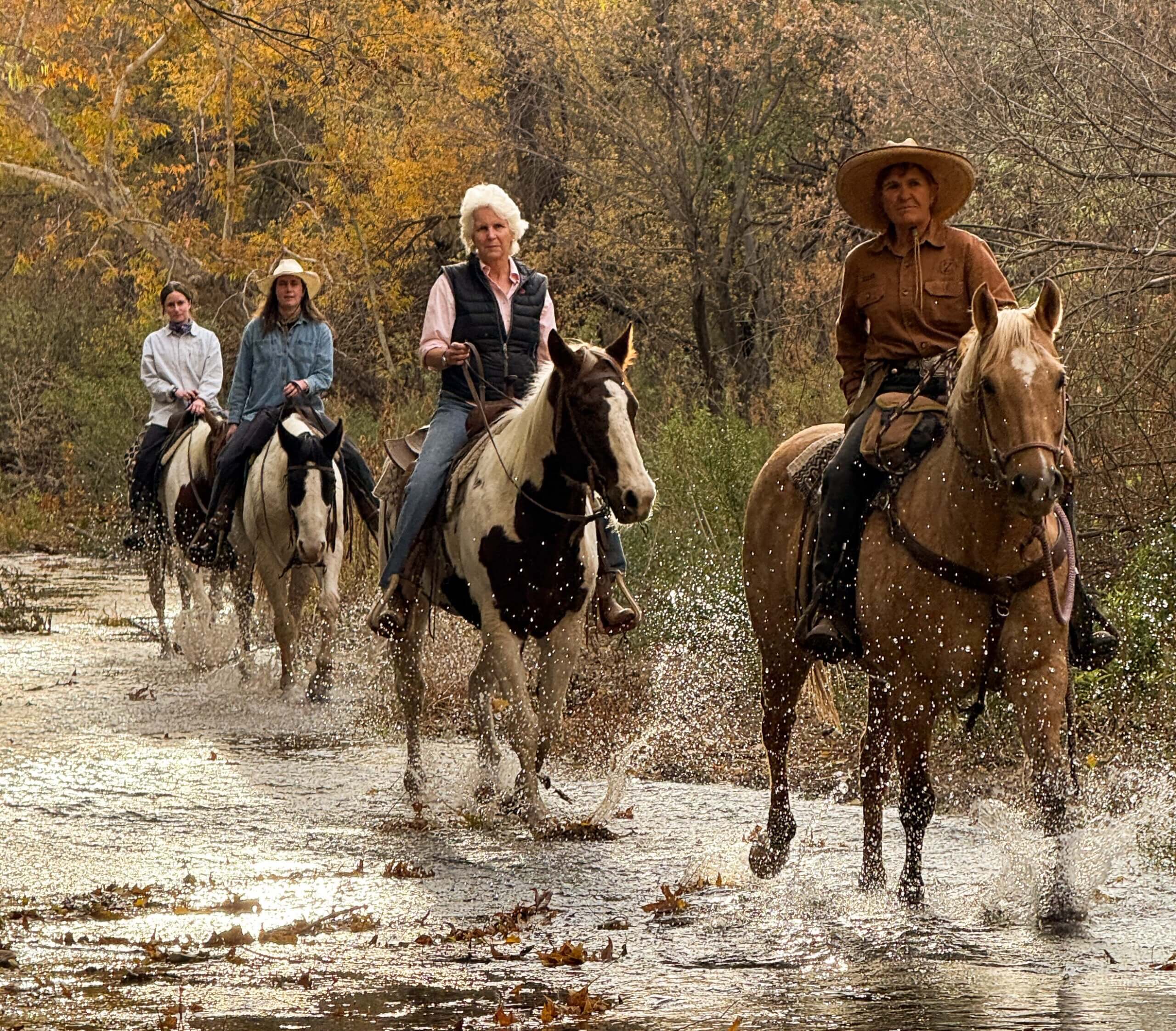
And it shapes every horseback riding experience guests have at this historic guest ranch.

What Stewardship Really Means

Stewardship is often used alongside conservation, but the two are not exactly the same.

Conservation is the goal—protecting and sustaining the land.

Stewardship is the action.

It’s the ongoing responsibility of:

  • Caring for ecosystems
  • Maintaining balance
  • Making decisions that prioritize long-term health over short-term gain

At a working guest ranch, stewardship takes on a unique form. It means balancing human experience—like horseback riding—with the needs of the land itself.

It means asking:

How do we use this land without depleting it?
How do we share it without changing what makes it special?
These are not simple questions.

But they are essential ones.

The Origins of Conservation at Circle Z

The story of conservation at Circle Z is rooted in a single, defining moment.

In the 1970s, the ranch was at risk of being sold and developed. Offers were being considered that would have transformed the property into something entirely different.

Instead, the Nash family stepped in.

Their decision was not just about saving a guest ranch—it was about preserving a landscape, a way of life, and an experience built around horseback riding and connection to nature.

That decision is what allows guests today to ride across open land that remains largely unchanged.

It is conservation in its most tangible form.

Conservation as a Living Practice

One of the most important things to understand about conservation is this:

It is not static.

It is not something you do once and then walk away from.

At Circle Z, conservation is a living process.

It includes:

  • Managing grasslands to prevent overgrowth and maintain biodiversity
  • Pruning trees to reduce fire risk and support healthy canopies
  • Protecting water systems that sustain wildlife and vegetation
  • Maintaining trails in a way that minimizes environmental impact

According to research from the U.S. Forest Service, active land management is essential for maintaining ecosystem health, especially in fire-prone and semi-arid regions (source).

This kind of work often goes unseen.

But it is what makes the visible beauty possible.

Why Conservation Matters for Horseback Riding

For many guests, the highlight of a guest ranch stay is horseback riding.

What’s less obvious is how deeply that experience depends on conservation.

Healthy trails require:

  • Stable soil
  • Balanced vegetation
  • Proper water management

Without careful stewardship, trails erode. Habitats degrade. The experience changes.

At Circle Z, conservation ensures that:

  • Trails remain natural and varied
  • Wildlife continues to thrive
  • Riders can experience the land as it was meant to be seen

This is what makes horseback riding here feel so different.

It’s not curated.

It’s authentic.

Understanding the Land: The Foundation of Stewardship

True conservation begins with understanding.

At Circle Z, that means understanding the complexity of the land itself.

Located in Arizona’s Sky Islands region, the ranch sits within one of the most biodiverse areas in North America. Elevation changes create multiple ecosystems within a small area—from desert to grassland to forest.

Each of these ecosystems has its own needs.

  • Some require more sunlight
  • Others depend on shade
  • Some thrive with minimal water
  • Others rely on consistent moisture

Effective stewardship means recognizing these differences and managing the land accordingly.

According to the University of Arizona, the Sky Islands are critical biodiversity hotspots that require careful conservation strategies to remain intact (source).

This knowledge informs every decision made on the ranch.

Water: The Heart of Conservation

In the Southwest, conservation is inseparable from water.

At Circle Z, Sonoita Creek plays a central role in sustaining the landscape. Fed by underground aquifers and surrounding mountains, it supports plant life, wildlife, and the overall health of the ecosystem.

But water systems are fragile.

Overuse, climate change, and external pressures can all impact groundwater levels.

The U.S. Geological Survey emphasizes the importance of protecting groundwater systems to maintain long-term ecological balance (source).

At a guest ranch, this means:

  • Monitoring water usage
  • Protecting riparian areas
  • Ensuring that horseback riding and other activities do not disrupt natural systems

Water is not just a resource here.

It is the foundation of conservation.

Passing It Forward: Conservation Across Generations

Perhaps the most important aspect of conservation is time.

True stewardship is not about immediate results—it’s about long-term impact.

At Circle Z, conservation is guided by a simple principle:

The land is not owned. It is borrowed.

Borrowed from the past.
Borrowed from future generations.

This perspective changes everything.

It shifts decisions from:

What is best right now?
to
What will sustain this place over time?

According to the National Park Service, intergenerational stewardship is one of the most effective ways to ensure long-term conservation success (source).

At Circle Z, that philosophy is lived daily.

Conservation and the Guest Ranch Experience

For guests, conservation might not be something they think about directly.

They come for:

  • Horseback riding
  • The landscape
  • The experience of a guest ranch

But conservation is what makes all of that possible.

It’s what allows guests to:

  • Ride through untouched terrain
  • Experience diverse ecosystems
  • Feel a genuine connection to the land

Without conservation, the experience would change.

And over time, it would disappear.

The Emotional Impact of Stewardship

There’s something that happens when people spend time in a place that has been carefully preserved.

They notice more.

They slow down.

They begin to feel connected—not just to the land, but to the idea of caring for it.

Research from the American Psychological Association shows that time spent in natural environments can increase awareness and motivation for environmental stewardship (source).

At Circle Z, this happens naturally.

Guests arrive for a vacation.

They leave with a deeper appreciation for conservation.

Why Conservation Matters More Than Ever

Today, conservation is more important than ever.

Land across the West continues to face pressure from:

  • Development
  • Resource use
  • Environmental change

Places like Circle Z are increasingly rare.

They represent what is still possible when conservation is prioritized.

And they offer something invaluable:

A chance to experience the land not as it has been changed—but as it has been preserved.

A Responsibility We All Share

Conservation is not just the responsibility of those who own land.

It belongs to everyone who experiences it.

Every guest who visits Circle Z becomes part of that story.

By riding the trails.
By respecting the land.
By appreciating what has been preserved.

They help carry that legacy forward.

Experience Conservation in Action

If you’re looking for more than just a vacation—if you want to experience a place where conservation, horseback riding, and the spirit of a true guest ranch come together—Circle Z offers something truly unique.

Book your stay at Circle Z Ranch and experience conservation in action.

Contact us to learn more about our land stewardship and guest experiences.

Final Thoughts: The Future Depends on What We Protect Today

The story of Circle Z is a story of conservation.

It’s a reminder that the choices we make today shape what exists tomorrow.

And it’s proof that when land is cared for with intention, it can continue to inspire, support, and connect people for generations to come.

Book your guest ranch vacation today and become part of a legacy of conservation.

Walk through the landscape surrounding Circle Z Ranch long enough, and you’ll begin to notice something remarkable.

What first appears to be a beautiful collection of grasslands, creek corridors, mountain slopes, and desert plants gradually reveals itself as something much more complex. Every tree, shrub, flower, and berry bush tells a story—not only about survival, but also about healing.

For thousands of years, people have looked to plants for food, shelter, tools, and medicine. Long before pharmacies existed, communities across the world relied upon the natural world to support their health and well-being. Many of today’s medicines have their origins in plants, and scientists continue to study botanical compounds that have been used for generations.

These lessons remind us that some of the most valuable natural remedies may not be found on store shelves at all.

They may be growing quietly beside a creek, beneath the shade of an ash tree, or among the berries of an elder shrub.

Understanding Natural Remedies Through the Landscape

When people hear the phrase natural remedies, they often think of teas, tinctures, herbal supplements, or traditional medicines.

While these certainly qualify, the concept is much broader.

Natural remedies encompass the relationship between people and the natural world. They include not only medicinal plants but also the restorative effects of spending time outdoors, breathing clean air, moving through natural landscapes, and reconnecting with the rhythms of nature.

In many ways, the landscape itself can be considered a source of healing.

This idea is reflected in growing scientific research showing that time spent in natural environments can reduce stress, improve mood, lower blood pressure, and support overall well-being.

The Japanese practice of shinrin-yoku, often translated as “forest bathing,” has received significant attention for its potential health benefits. Researchers continue exploring how exposure to natural environments influences both physical and mental health.
For guests visiting a western dude ranch, these benefits often occur naturally.

A day spent horseback riding through grasslands and creek corridors creates opportunities to slow down, observe, and reconnect with the world around us.

The Ancient Relationship Between Plants and Healing

Human beings have relied on plants as medicine for thousands of years.

Ancient cultures across North America, Europe, Asia, Africa, and South America developed sophisticated systems of herbal knowledge based on observation and experience.

Plants were used to address a wide range of conditions and concerns.

Some were valued for supporting digestion.

Others were used to soothe inflammation.

Still others helped support the immune system or promote relaxation.

Modern medicine has validated some traditional uses while continuing to study others.

What remains clear is that ecosystems contain an extraordinary diversity of biologically active compounds that continue to intrigue researchers today.

This is one reason biodiversity matters.

The loss of plant species may also mean the loss of future medicinal discoveries.

Healthy ecosystems support not only wildlife but potentially the future of medicine itself.

Elderberry: One of Nature’s Most Celebrated Remedies

Among the many plants associated with traditional herbalism, few are as widely recognized as elderberry.

For centuries, elderberries have been used in traditional practices throughout Europe and North America.

Today, elderberry products remain popular and are commonly found in:

  • Syrups
  • Lozenges
  • Teas
  • Gummies
  • Tinctures

Researchers continue investigating elderberry’s properties and potential role in supporting immune health.

The berries contain naturally occurring compounds known as anthocyanins, which are responsible for their deep purple color and antioxidant activity.

While scientific research continues to evolve, elderberry remains one of the most well-known examples of how traditional plant knowledge has endured across generations.

For herbalists, elderberry represents something larger than a single remedy.

It symbolizes a broader understanding that healing resources often exist within healthy ecosystems.

Ash Trees: Quiet Giants of the Creek Corridor

If elderberry captures attention because of its berries, ash trees often inspire appreciation through their presence.

Ash trees thrive in riparian areas where water supports lush vegetation and diverse wildlife.

These trees provide:

  • Shade
  • Habitat
  • Soil stabilization
  • Ecological diversity

Historically, various species of ash have also been incorporated into traditional herbal practices.

Different parts of the tree were used by cultures around the world for a variety of purposes.

Today, ash trees remind us that medicinal landscapes are often interconnected landscapes.

A healthy creek supports ash trees.

Ash trees support wildlife.

Wildlife contributes to ecological balance.

The entire system functions together.

When we speak about natural remedies, we are often speaking about relationships within ecosystems rather than isolated plants.

Why Biodiversity Matters for Natural Remedies

A healthy ecosystem is far more than a collection of individual species.

It is a network.

Every plant, animal, insect, and microorganism plays a role.

The greater the biodiversity, the greater the potential for ecological resilience and scientific discovery.

Many important medicines originated from plants.

Examples include:

  • Aspirin (derived from willow bark compounds)
  • Digitalis (derived from foxglove)
  • Quinine (derived from cinchona bark)

Researchers continue exploring plant compounds in search of future treatments and therapies.

This connection between biodiversity and medicine provides another compelling reason to support conservation efforts.

Protecting ecosystems may also protect future opportunities for scientific advancement.

Nature as Healing: More Than Medicine

When discussing nature as healing, it is important to recognize that healing can take many forms.

Sometimes healing occurs through experience.

Guests at Circle Z Ranch frequently describe feelings of calm, clarity, and renewal after spending time on the land.

These experiences often arise from simple activities:

  • Horseback riding through open grasslands
  • Listening to flowing water
  • Watching wildlife
  • Sitting beneath large trees
  • Experiencing silence away from daily distractions

Modern life is increasingly fast-paced.

Nature invites us to slow down.

That invitation alone can be profoundly restorative.

What Horseback Riding Teaches About Natural Remedies

One of the most surprising teachers of natural remedies may be horseback riding itself.

When you travel on horseback, you move at a pace that encourages observation.

You begin noticing:

  • Plant diversity
  • Seasonal changes
  • Wildlife activity
  • Water sources
  • Ecological relationships

A trail ride becomes more than transportation.

It becomes a lesson in ecology.

Many guests discover that horseback riding allows them to experience the landscape in a way that would be impossible from a car window.

They develop a greater appreciation for the plants and ecosystems surrounding them.

In this way, horseback riding becomes part of the healing experience.

The Importance of Healthy Creek Ecosystems

Many medicinal plants thrive in riparian environments.

Creeks provide water, shade, and rich soils that support plant diversity.

Healthy creek systems also support:

  • Birds
  • Pollinators
  • Mammals
  • Amphibians
  • Native vegetation

At Circle Z Ranch, the presence of Sonoita Creek contributes to a remarkably diverse landscape that supports a wide variety of plant and animal life.

These ecosystems remind us that natural remedies depend on healthy environments.

Without functioning ecosystems, many medicinal plants simply cannot survive.

Conservation and herbalism are often more connected than people realize.

Why Stewardship Protects Future Healing Landscapes

The future of many natural remedies depends upon the health of natural ecosystems.

Protecting watersheds, preserving biodiversity, and maintaining wildlife habitat all contribute to the long-term viability of medicinal plants.

This perspective aligns closely with the conservation values that have shaped Circle Z Ranch for generations.

The ranch’s protected landscapes support not only horseback riding adventures but also healthy ecological communities that continue to thrive today.

Every conserved acre represents an investment in future generations.

Not only for recreation.

Not only for wildlife.

But potentially for future discoveries in medicine and wellness.

A Dude Ranch Experience That Connects You to the Land

Many people visit a dude ranch expecting adventure.

They leave with something deeper.

They gain a new appreciation for:

  • Native plants
  • Local ecosystems
  • Conservation
  • Wildlife
  • Natural history

At Circle Z Ranch, horseback riding becomes a gateway to understanding the landscape.

The more time guests spend outdoors, the more they begin to notice the intricate connections that make healthy ecosystems possible.

Those observations often inspire lasting curiosity about the natural world.

The Most Powerful Natural Remedy May Be Connection

While elderberry, ash trees, and other medicinal plants deserve recognition, perhaps the greatest lesson the landscape teaches is about connection.

Connection to:

  • Nature
  • Wildlife
  • Water
  • Community
  • Place

Research increasingly suggests that meaningful connections with the natural world contribute positively to overall well-being.

Perhaps this is why so many guests describe their ranch experiences as restorative.

The healing isn’t found in any single plant.

It’s found in the relationship between people and the land itself.

Experience Nature as Healing at Circle Z Ranch

The landscapes surrounding Circle Z Ranch offer more than scenic beauty. They provide opportunities to experience the interconnected relationships between plants, wildlife, water, and people.

Whether you’re interested in horseback riding, conservation, herbal traditions, or simply spending time in nature, the ranch offers a unique opportunity to explore one of Arizona’s most remarkable ecosystems. Guests can ride through grasslands, creek corridors, and mountain landscapes while gaining a deeper appreciation for the healing power of the natural world.

Learn More

Interested in learning more about the landscapes, plant communities, and conservation efforts at Circle Z Ranch? Contact our team for additional information about the ranch and its unique natural environment.

Book Your Circle Z Ranch Vacation

Experience horseback riding, western hospitality, and the restorative power of nature firsthand.

Book your Circle Z Ranch vacation today and discover why some of the most powerful natural remedies begin with time spent on the land.

How can you Choose the perfect guest ranch for a solo trip, a family trip, or a vacation with your friends?

A guest ranch is an outdoor adventure vacation that is sought out by travelers of all ages and all levels of riding experience. It is the perfect vacation choice for active families with kids, seniors, and solo travelers. In the search for the perfect guest ranch experience there are several key questions to ask. We find that most vacationers like to devote time researching all the options, and the choices can be as vast as the differences.

The biggest question to ask is how many guests does the ranch take at a given time. The sizes can vary from 10 to 150 guests. If looking for more personalized and intimate experiences, the smaller ranches are typically more focused on individualized experiences while the larger ranches have more types of experiences to offer. The Circle Z Ranch takes 30 guests at a time and has a program that is centered around horseback riding. We take pride in individualizing each guest’s experiences for the ultimate in enjoyment.

The types of activities vary as well between ranches, so it is always good to look at the full list of offerings. Most guest ranches are focused on outdoor activities such as mountain biking, rock climbing and hiking in addition to horseback riding. A key ask is the availability of each activity to the guests, or if there a limit to the number that can participate. At the Circle Z Ranch our specialty is riding and that is where our expertise lies, and our rides are different everyday of the week from cookouts to all days rides to trailering horses to ride elsewhere. And our area is the most beautiful and biodiverse in the state so guided hikes and nature walks are popular activities.

Amenities also vary from ranch to ranch. Is tennis and a heated pool important in your choice? Do you want spa service and hot tubs? The latter services are typically found at the more resort-oriented ranches.

And always ask how many horses to guest ratio. If they take more guests than horses then you know that riding is not a main focus. At the Circle Z Ranch we have double the number of horses to riders. That way we can always have the perfect fit of horse to rider. This also ensures that are horses are adequately rested and healthy, and that each guest, regardless of ability, will have the perfect horse.

Details & Policies